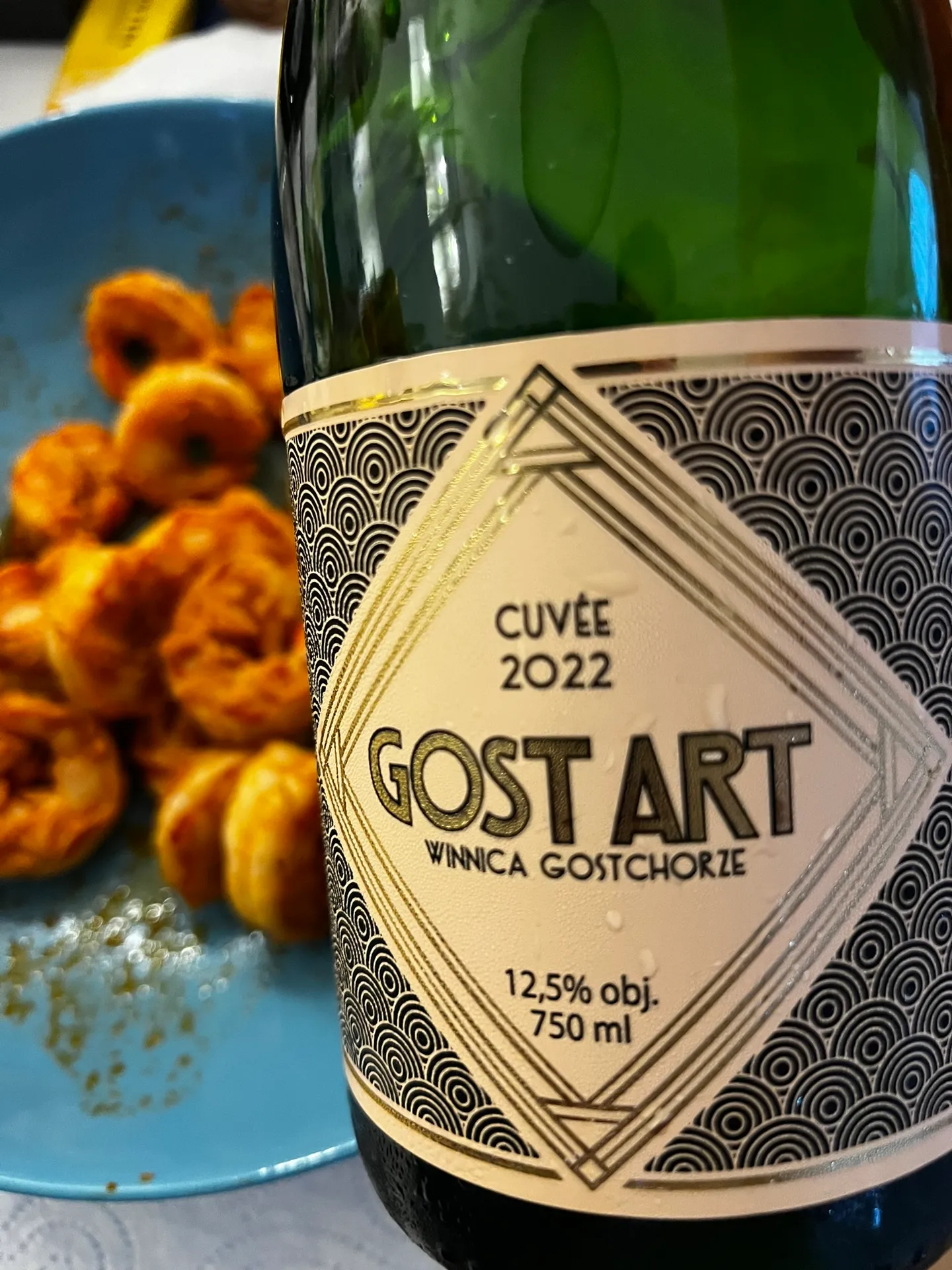
Having GostArt (or polish wine in general)
2026
in progress
The region is developing with more worthy wines to be tried
Poland
Polish wine and the Baltic belt
If someone told you ten years ago that Poland would have over 560 registered vineyards, that Polish sparkling wine made by méthode traditionnelle would be winning blind tastings against Champagne, and that the country’s wine market would be growing 10–15% every year — larger now than Finland’s or Belgium’s — you’d have assumed they were drunk. On Polish wine, presumably.
But that’s exactly where things stand. And the part that’s least talked about, and most interesting, is what’s happening in the north — along the Baltic, in Pomorskie and Western Pomerania, in Kaszuby, and across the water in Denmark and Sweden. The same grapes. The same latitude. The same revolution. They just don’t know they’re in it together yet.
Why this matters now
From 2009 to 2020, the number of registered producers increased 16-fold, vineyard area 15-fold, and production 35-fold. There are now over 400 wineries making more than 2 million bottles a year. Polish wines sit on Michelin-starred restaurant lists in Warsaw and Kraków. Falstaff — one of Europe’s most respected wine publications — ran a 2023 feature calling Polish wine “the next big thing.” The second Polish Wine Fest in Dublin sold out. A presentation in Brussels sold out.
Key features
The PIWI grapes
- The backbone of northern European wine — from Gdańsk to Gothenburg to Copenhagen — is a family of grapes called PIWI (from the German pilzwiderstandsfähig, meaning “fungus-resistant”). These are hybrids bred specifically to survive cool climates, ripen in short seasons, and resist disease without pesticides. The key names: Solaris, Johanniter, Souvignier Gris for whites; Rondo and Regent for reds. If you taste wine in Pomorskie, then cross the Baltic to Sweden or Denmark, you’ll find the exact same varieties in the glass.
- Solaris is the star. Bred in Germany in 1975, released commercially in 2004, it’s now the dominant grape in Swedish vineyards, the most-planted variety in Denmark, and one of Poland’s workhorses. It ripens early, handles frost, and in the right hands produces wines with citrus brightness and a mineral edge that genuinely surprises people who expect northern wine to taste like compromise.
Pomorskie and Kaszuby
- Pomorskie isn’t where most Polish wine comes from — the south and west (Lubusz, Lower Silesia, Lesser Poland) dominate production. But it’s where the most interesting experiments are happening, because the conditions are harder and the winemakers who choose to work here are either stubborn, visionary, or both.
- Kania Lodge near Kartuzy in Kaszuby is the strangest vineyard story in Poland. A New Zealander named John Borrell fell in love with the Kashubian lake country, bought an estate overlooking Jezioro Białe, and planted vines where nobody thought grapes could grow. He also built a boutique hotel with one of the richest wine cellars in Northern Poland — over 250 labels from a dozen countries, recognized by Wine Spectator. His own vineyard produces wine from Kashubian soil. The restaurant serves lamb from his own farm, roasted New Zealand-style, paired with Kashubian mushrooms and his own vintages. It’s a collision of hemispheres that shouldn’t work but does.
- Winnica Mitumi on the Kaszuby-Kociewie border started in 2016 and launched agritourism in 2019. It’s 1.5 hectares with a central pond, producing small-batch wines and offering tastings in a setting that feels more like a private garden party than a commercial vineyard.
- Winnica Żabi Raj (“Frog’s Paradise”) near Skarszewy has been running since 2007 — one of the earliest in the region. Two hectares on a south-facing slope surrounded by forest. The name is literal: the frogs are real and very loud in summer.
- The Western Pomerania subregion near Szczecin is developing faster. Turnau — now Poland’s largest estate — and Kojder, run by siblings Anna and Artur who farm fully organically, are both here. Kojder’s Souvignier Gris, made clean in stainless steel, is one of the most reliable Polish bottles year after year. The Baltic Sea moderates their growing season the same way it does for Swedish vineyards across the water.
Winnica Gostchorze — the Champagne method
Winnica Gostchorze deserves its own section because it’s doing something almost nobody else in Poland does: exclusively méthode traditionnelle sparkling wine, made the way they make it in Champagne — because the owner trained there. Guillaume Dubois is a Frenchman of Polish descent who planted his first vines in 2008 on 15 hectares of green hills along the Oder River near Krosno Odrzańskie. His first commercial vintage came in 2014. French and Polish laboratories both gave it remarkably favorable evaluations.
Gostchorze is technically in Lubusz, not Pomorskie — but it’s the flagship example of what the broader northern Polish wine belt is capable of. If you’re in Gdańsk, it’s a day trip. And if you’ve been skeptical about Polish sparkling wine, this is the bottle that will change your mind.
Quick Facts
- 560+ of polish vineyards registered (up from ~35 in 2009)
- 2+ million bottles across 400+ wineries
- Key PIWI grapes - Solaris, Johanniter, Souvignier Gris, Rondo, Regent
- Climate projection is that by 2050, Poland may grow the same varieties currently used in France and Spain
Why it’s a must experience
The wines are good, some are genuinely excellent, and the prices are good because the industry is young and land costs are a fraction of Western Europe. A bottle from Kojder or Gostchorze costs what you’d pay for a mediocre Prosecco. But the real reason to experience it now, specifically in Pomorskie and the Baltic north, is the story you’re stepping into.
This isn’t old-world tradition being preserved — it’s new-world ambition being invented in real time. The same grapes growing in Kaszuby are growing on Gotland and Bornholm. The same climate that’s making Denmark an official wine-producing country is reshaping what’s possible on the Polish Baltic coast. Twenty years from now, “Baltic wine” will probably be a recognized category. Right now, you can watch it being born.