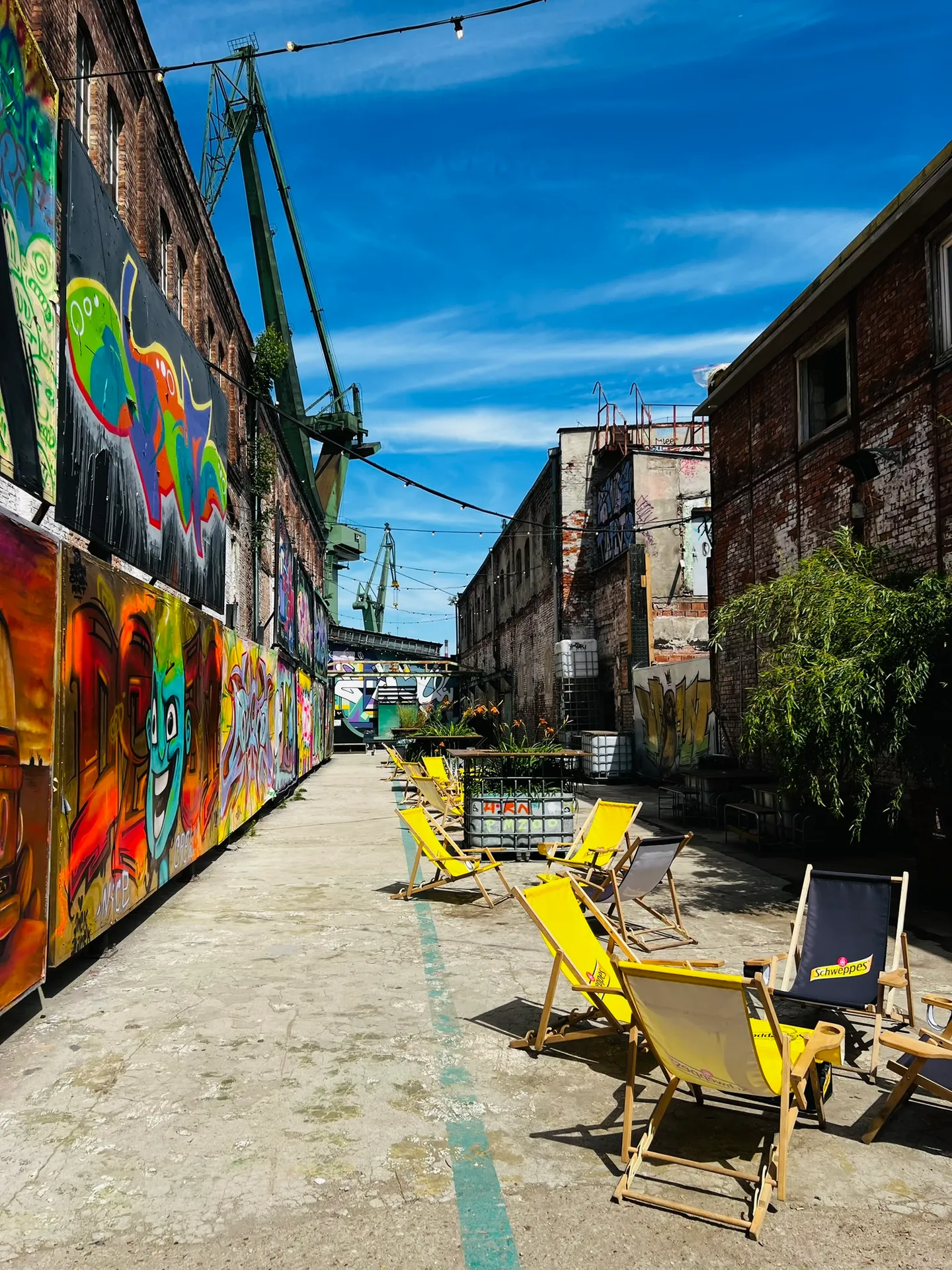
Hyping at 100cznia
2025
in progress
Energetic vibe in a paramount historical area
Gdańsk, Stocznia
Stocznia — Where Communism Fell and Hipsters Moved In
You turn a corner past a rusting crane, and there’s a shipping container bar with people drinking craft IPA on beanbags.
Behind them, Gate No. 2 - the gate that workers padlocked shut in August 1980 to prevent the army from doing what it did in 1970, which was shoot people. Forty-five years ago this was the most politically charged square meter in Europe.
Now someone’s doing yoga on it on Saturday mornings. That dissonance is the whole point of coming here. It’s not disrespectful. It’s the outcome the strikers were fighting for — a normal life in a free country. But the collision between those two realities is something you feel physically, and no other hipster district in Europe can give you that.
How it got here
The shipyard’s story as a cultural space started almost by accident. After the industry collapsed in the 1990s, most of the site was abandoned. Cranes stood still, halls rusted, weeds pushed through concrete. The city didn’t know what to do with it. Developers circled. Some buildings were demolished. But the historic core — especially around Solidarity Square and the Imperial Shipyard — was protected, and a strange ecosystem began to fill the vacuum. Artists moved into empty warehouses because the rent was nothing. A group of independent painters and sculptors took over a red-brick building on the Martwa Wisła waterfront and called it WL4 Mleczny Piotr — it’s still there, with metal sculptures outside and gallery shows inside. In 2017, two urban activists, Ala Jabłonowska and Kuba Łukaszewski, stacked shipping containers into a courtyard on the shipyard grounds and opened 100cznia. That was the tipping point. The hipsters followed.
U-boat hall
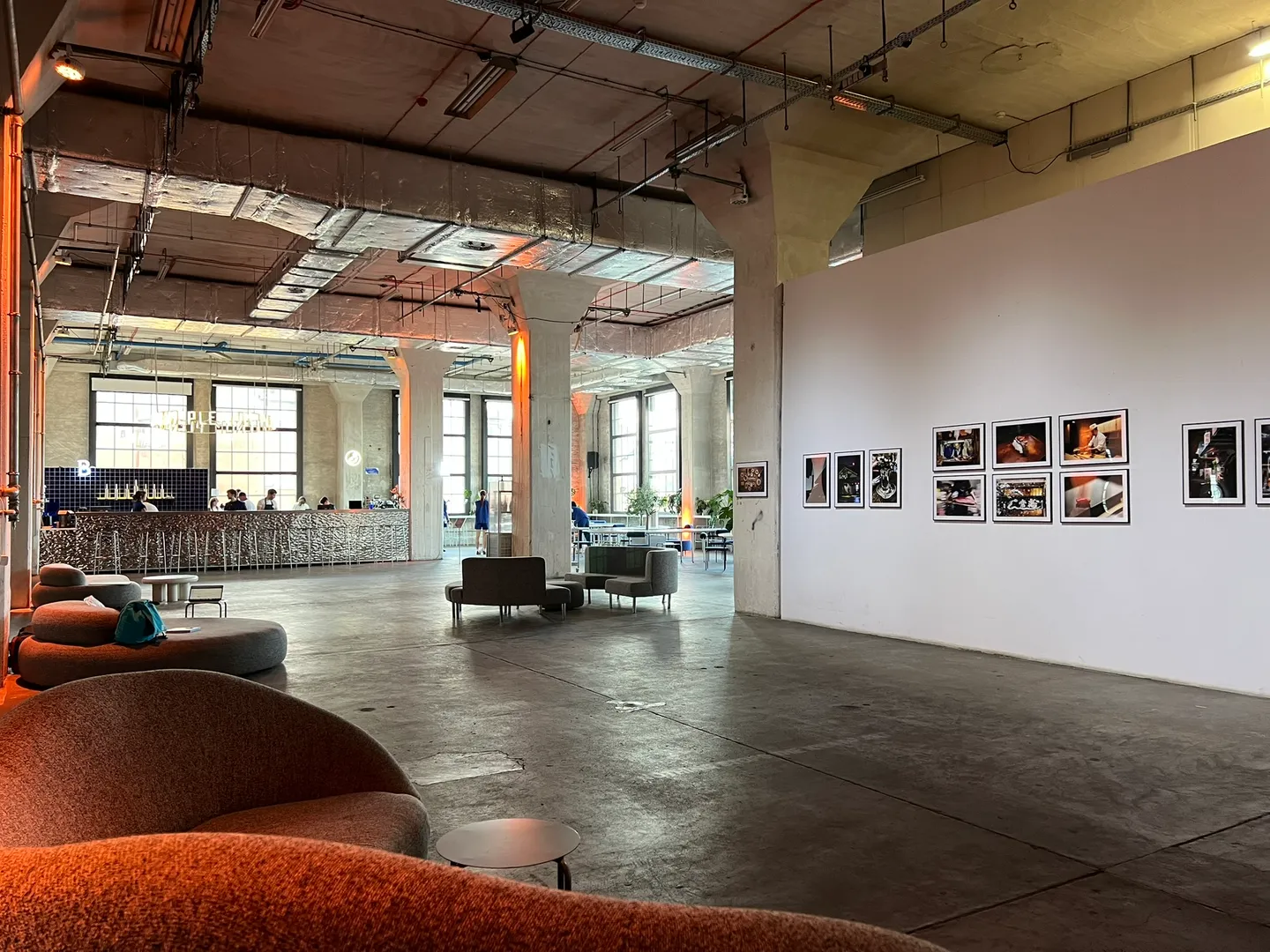
The U-boat hall deserves its own line. The Germans built it to assemble Type VII submarines and wrapped it in red brick so it looked like just another warehouse from the air. After the war, nobody could figure out how to demolish it without taking half the neighborhood with it. So it stayed. Now you eat Vietnamese pho and Alpine cheese plates inside it. Won a British Parliament award for adaptive reuse in 2021.
Elektryków street
- B90 is a proper concert venue built inside a former shipyard hall, acoustically treated but still raw. It hosts touring bands, small festivals, DJ nights. The industrial bones are left exposed on purpose.
- Drizzly Grizzly calls itself a “bearternative” bar. Live bands alternate with DJ and clubbing nights. The name is absurd, the vibe is genuine.
- W4 Food Squat occupies another former hall and brings in food trucks from Tricity’s best restaurants — Nie/mięsny (plant-based), Łąka Bar, Carmnik. It rotates, so you never get the same lineup twice.
- On Friday and Saturday nights, 100cznia turns the whole courtyard into a dance floor with a night food market. The music leans hip-hop, nu soul, afrobeat, tropical house. It feels like a block party in a post-industrial ruin, which is exactly what it is.
The strike
The strike of August 1980 was sparked by the firing of one person: Anna Walentynowicz, a crane operator. She’d worked at the shipyard for 30 years. They fired her five months before retirement on fabricated theft charges — really because she’d been distributing an underground newspaper called Robotnik Wybrzeża (Coastal Worker). Seventeen thousand workers struck in response. In her own words: “I was the drop that caused the cup of bitterness to overflow.” She later died in the 2010 Smolensk air disaster.
Quick Facts
- Founded as shipyard at 1844 (Prussian Royal Shipyard), later Imperial, then Schichau, then Lenin Shipyard
- 100cznia open year-round (indoor halls in winter, full courtyard May–September)
- Montownia Food Hall has 20+ restaurants inside a former U-boat assembly hall. Zero-plastic policy.
Why it stays with you
Every hipster district in Europe has the same ingredients: repurposed industrial space, craft food, DJ nights, street art. The shipyard has all of that. It also has something none of them can replicate — the weight of what happened here. You’re eating tacos in a building where submarines were assembled. You’re drinking beer on a street named after the electricians who de-facto rewired a continent’s politics.
None of this is hidden or sanitized — it’s all just there, coexisting. The 100cznia crowd doesn’t come here despite the history. They come here because the whole point of what happened at this shipyard was that people should be free to live however they want.