Written in by Alex Gostev
A day across the Tri-City with Jonas
Granaries, a shipyard, a cathedral, a small galaxy called Fyrtel.
The day before Norwegian Independence Day, Jonas decided to celebrate it on foot. So instead of bunting and brass, he got a day across Gdańsk, Oliwa and Gdynia — and a tour that connects dots.
- 1Old town granariesWhere grain became gold
- 2Gdańsk ShipyardBirthplace of Solidarity
- 3OliwaCathedral, park & home
- 4Gdynia centerThe modernism, planned
- 5FyrtelA small galaxy
Old town, where the city ends
We started near the old granaries, and I gave Jonas the thing tourist guides never tell — mostly because Yaroslav Hrytsak first stitched it together. When Columbus opened the Americas, silver flooded Europe and prices went insane. Grain became the new gold. Ukrainian grain moved up through Gdańsk and out across the Baltic, dodging the Arab-controlled Mediterranean entirely. That trade built these warehouses. It's directly connected to the creation of the first modern country that would eventually become Ukraine — the Cossack Hetmanate.
We stopped at the monument to Jan Heweliusz. Dutch-rooted astronomer, the center of this city's story.
Here's the part I like: Gdańsk's gorgeous center sits on the edge of the city. Step past it and it's just fields. The lone tower left from the Teutonic Knights' castle tells you why — when Poland finally beat the order whose taxes had long squeezed the city, people tore the castle down brick by brick and built their own houses out of it.
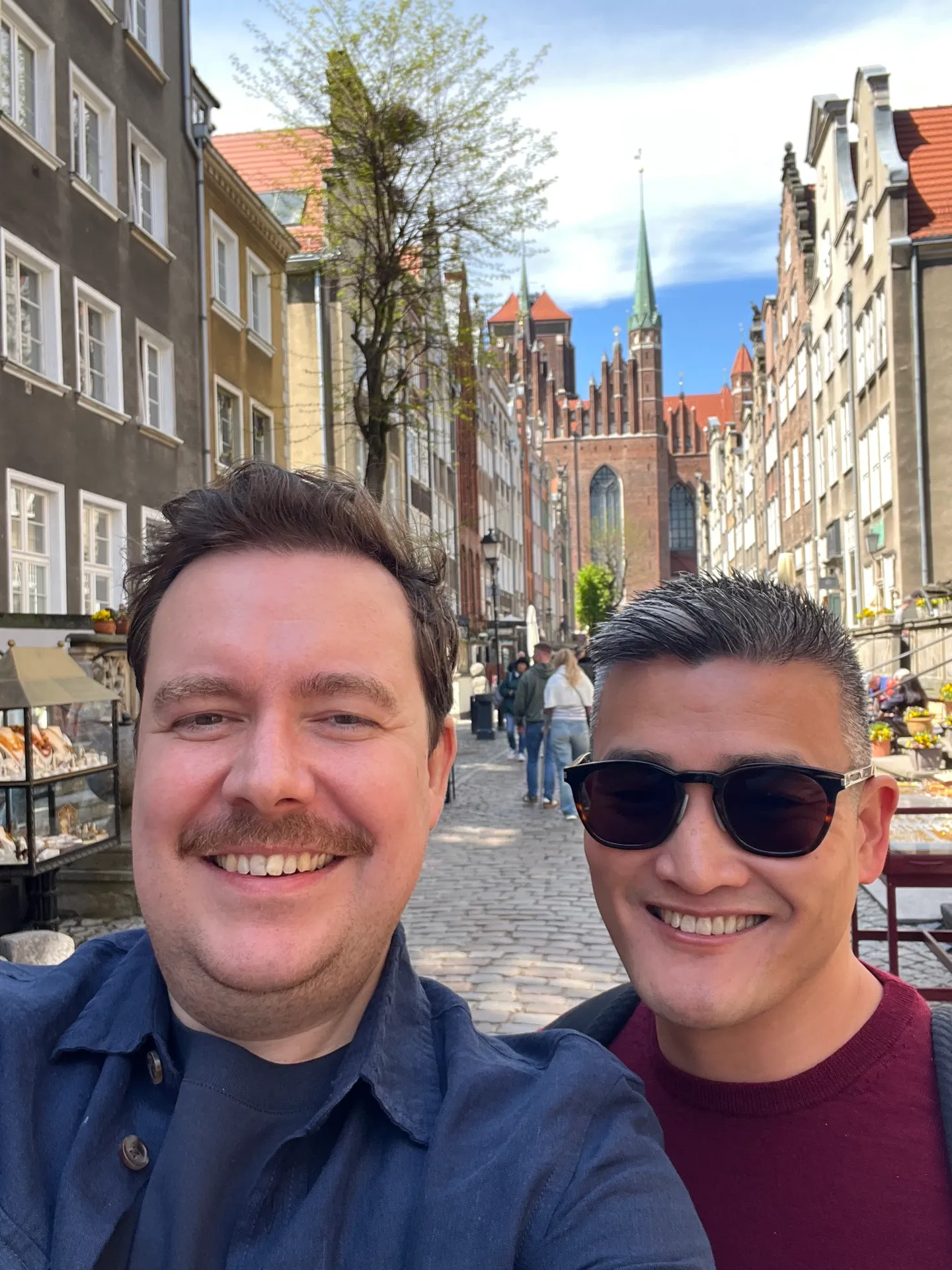
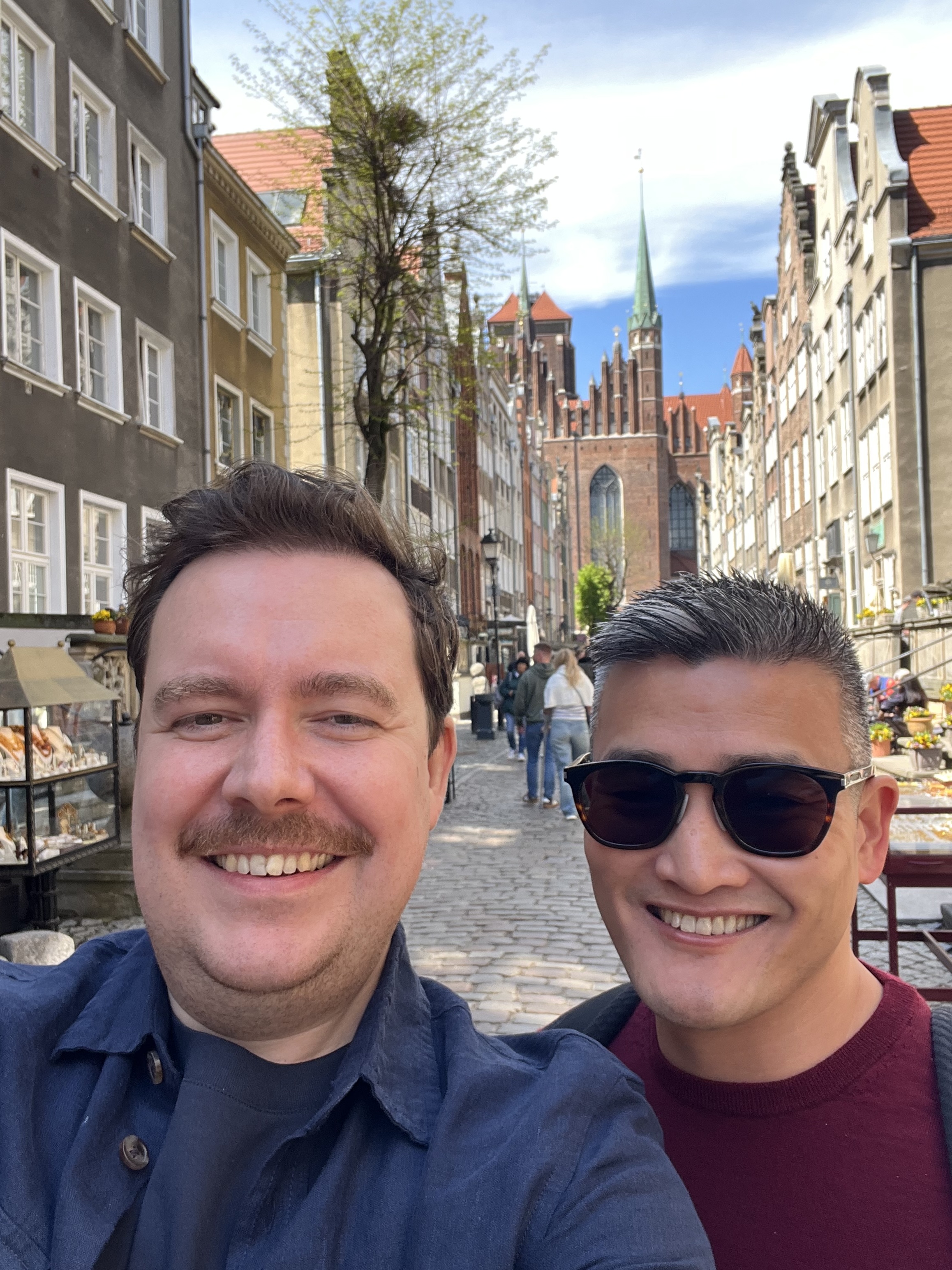
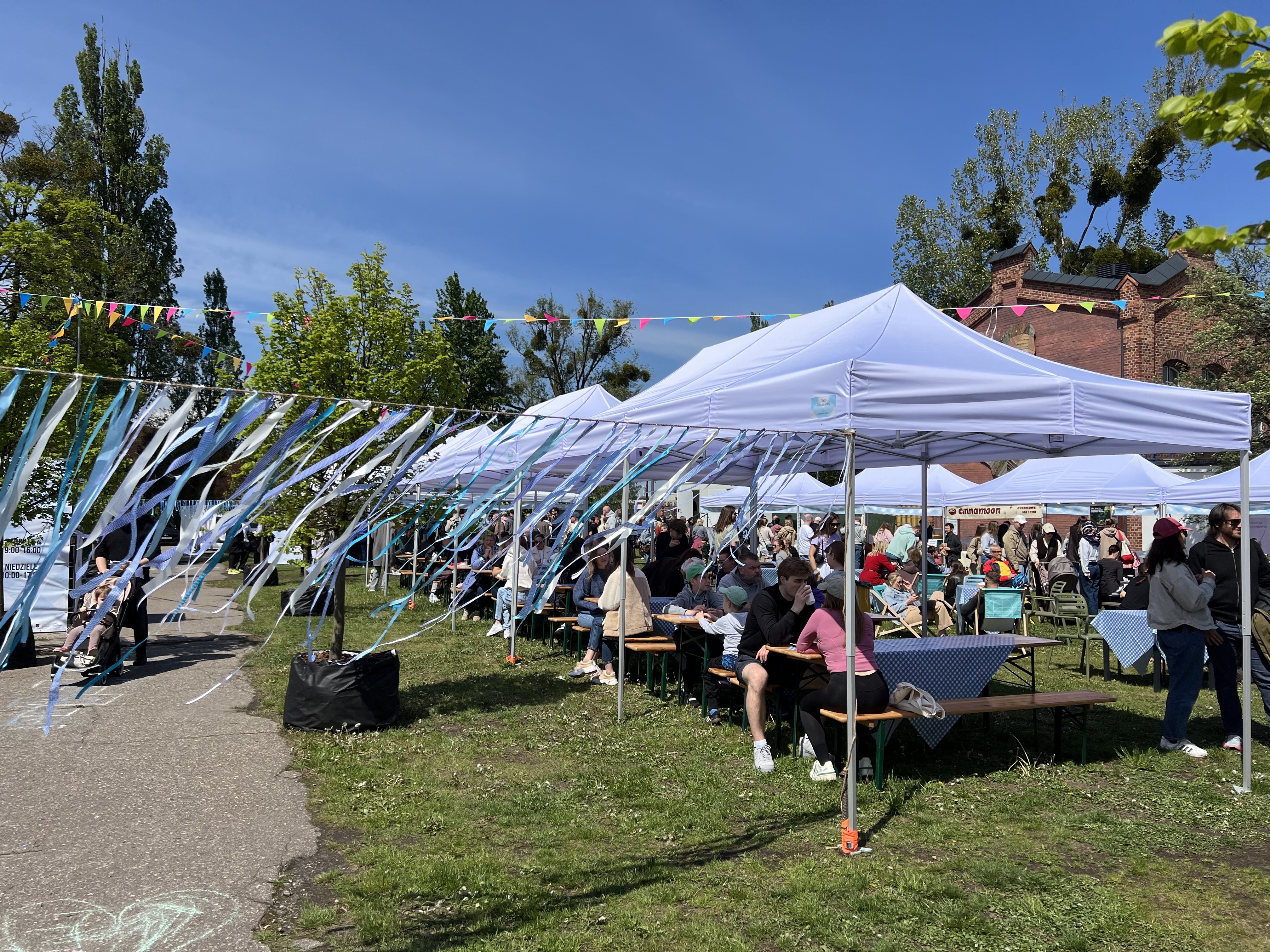
We cut through Mariacka Street — amber stalls down both sides, the Gothic church and its green spires hanging over everything — and stopped a while to take it in. On the way to the shipyard, a spring market under white tents, blue-and-white ribbons snapping in the wind, families packed onto long checkered tables.
The shipyard, and a lesson about language
If the old town is the city's postcard, the Stocznia is its real turning point — birthplace of Polish democracy and the whole Eastern European push against Soviet rule. At its peak it ran like a small city of its own.
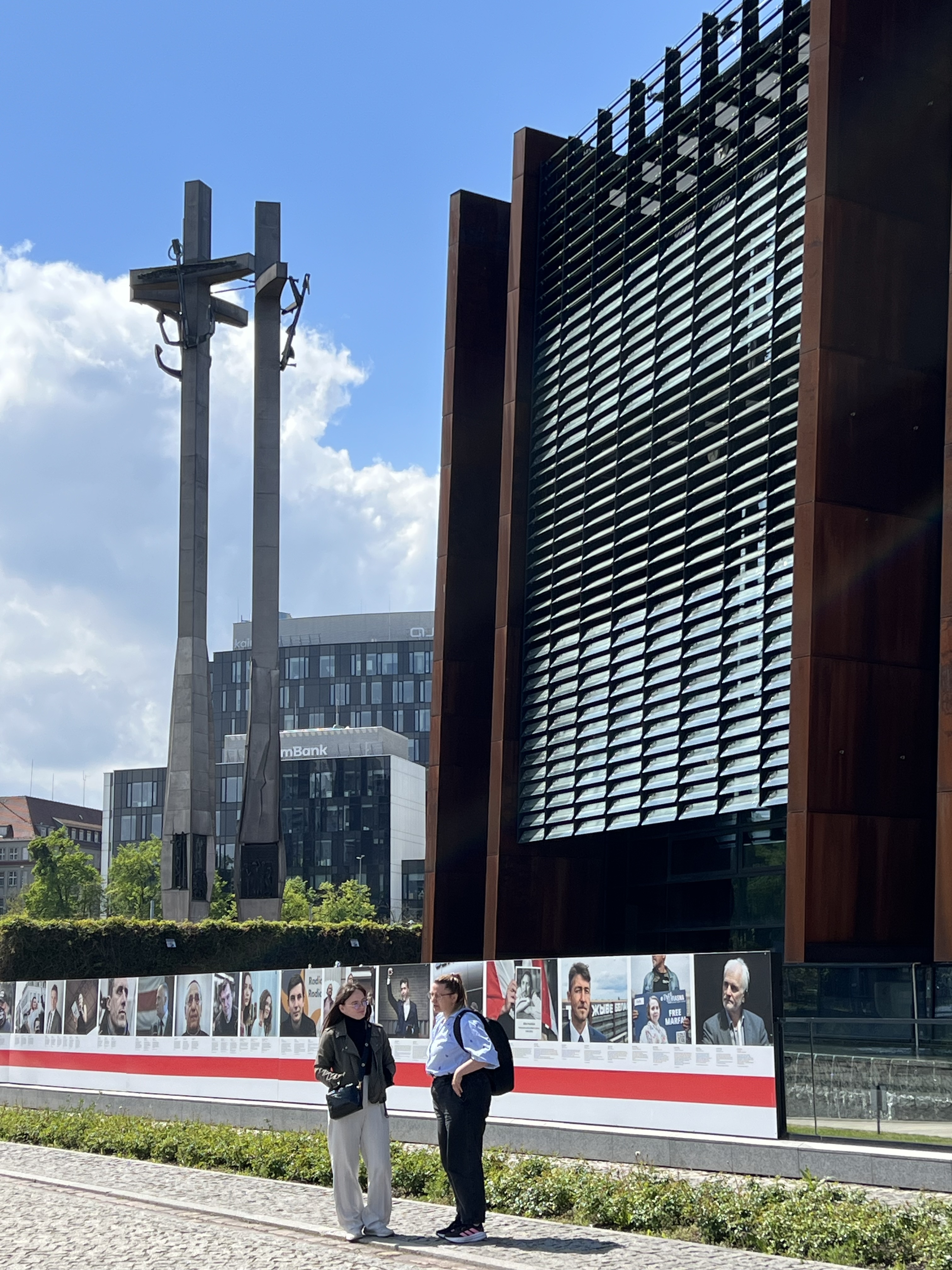
I told Jonas about Lech Wałęsa. Blue-collar electrician, no connections — which is exactly why people trusted him. Here's the kicker: he wasn't even the one who started the uprising. He was just the one who could speak — better than the others. He became the symbol of the revolution, won the Nobel Peace Prize in 1983, and was elected Poland's first democratically elected president in 1990.
A workers' union was the only legal vehicle left to fight a party you couldn't out-vote. It grew to ten million members.
Oliwa, and a place for the families
We took the train to Oliwa, where I'd argue the whole Tri-City is at its best — calm, close to both the business center and the beach. It was its own town once. One mayor borrowed a fortune to build a casino and out-do Sopot, couldn't repay it, and that's how Gdańsk swallowed Oliwa whole. The park goes back to the twelfth century; I walk it most mornings.
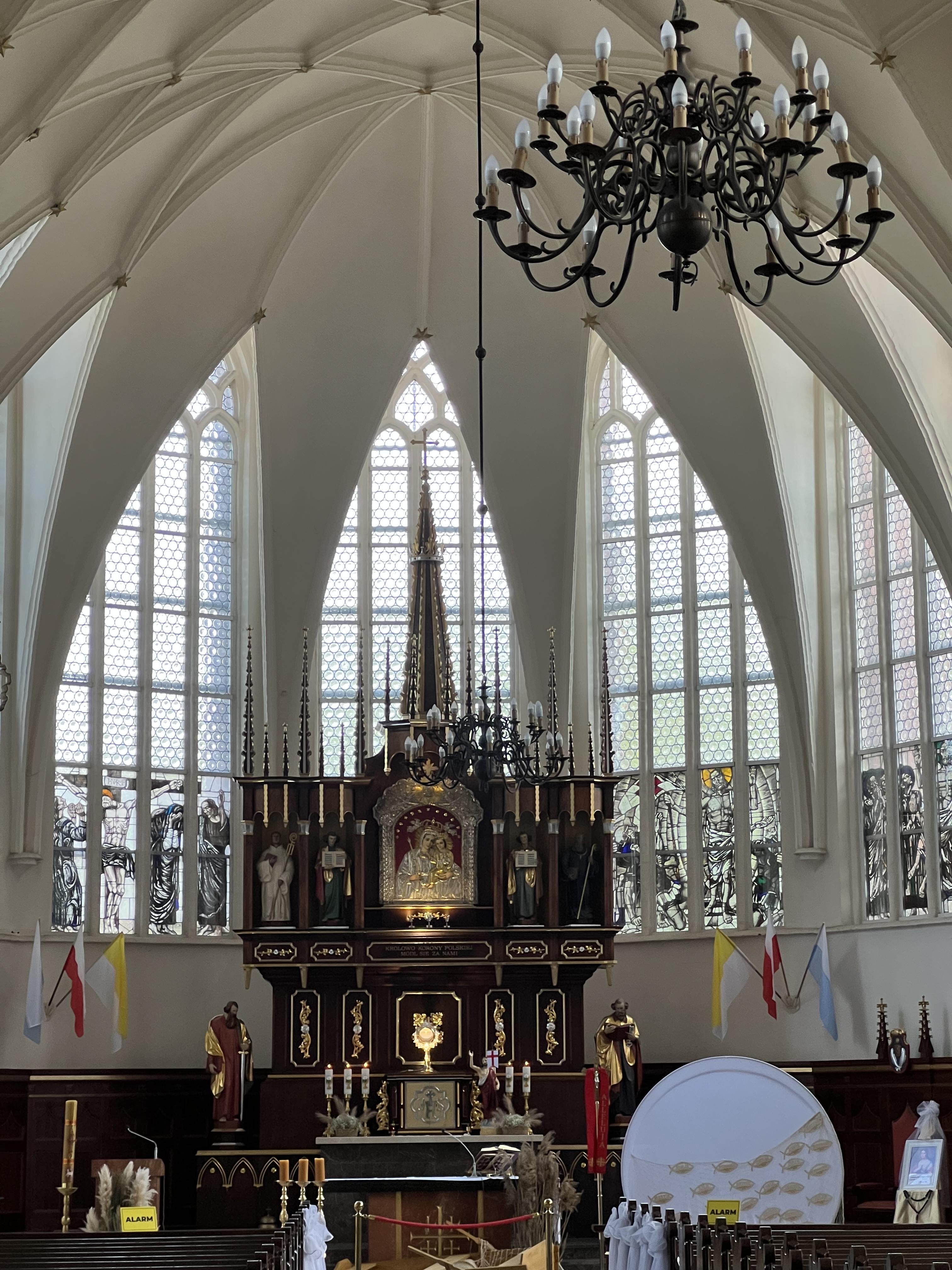
Inside the cathedral the ceiling does the work — white vaults pulling your eyes up, light pouring onto a dark-and-gold altar. Jonas didn't say a word in there, which is about the highest review a building gets.
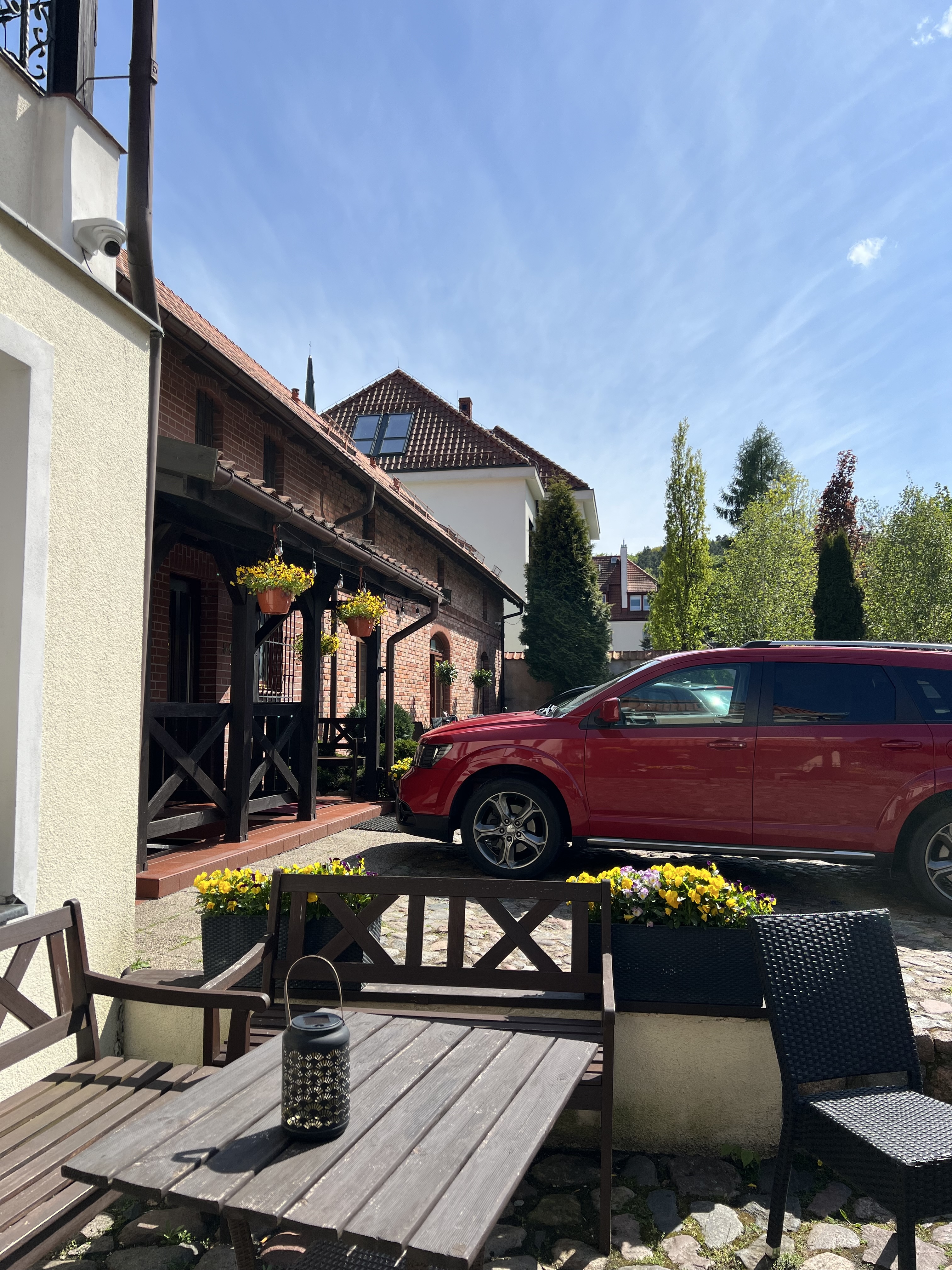
The Oliwa Park Residence is genuinely nice in a low-key way: a brick building with a wooden porch, baskets of yellow flowers spilling off the rails, and a ridiculous red Dodge parked on the cobbles like it owns them. The rooms are big, and the whole place feels like you've stepped outside the city — a properly restful, recreational kind of quiet.
Gdynia, built from nothing in three years
North to Gdynia, where the usual assumption gets it backwards. Everyone comes to Gdańsk for the medieval stuff, but it's Gdynia that's protected as a heritage site — for its modernism. After WWI, Gdańsk became a "free city," German in everything that mattered, leaving Poland with no port. So they built one.
Land auctioned in parcels, but every developer had to build to one master architect's plan. The result looks organic and was completely planted — clean, geometric, uniform. People write it off as ugly concrete, which is a lazy read.
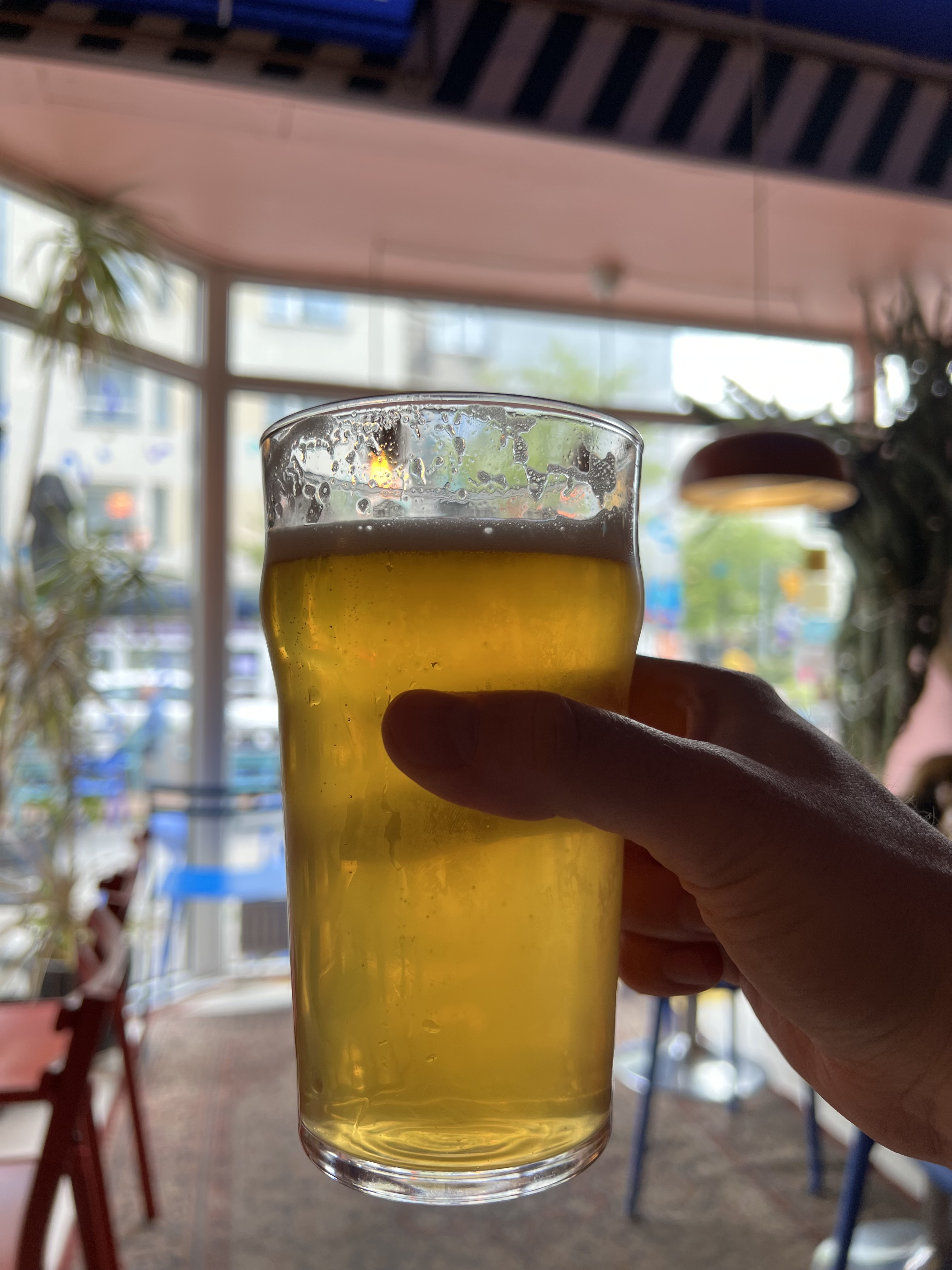
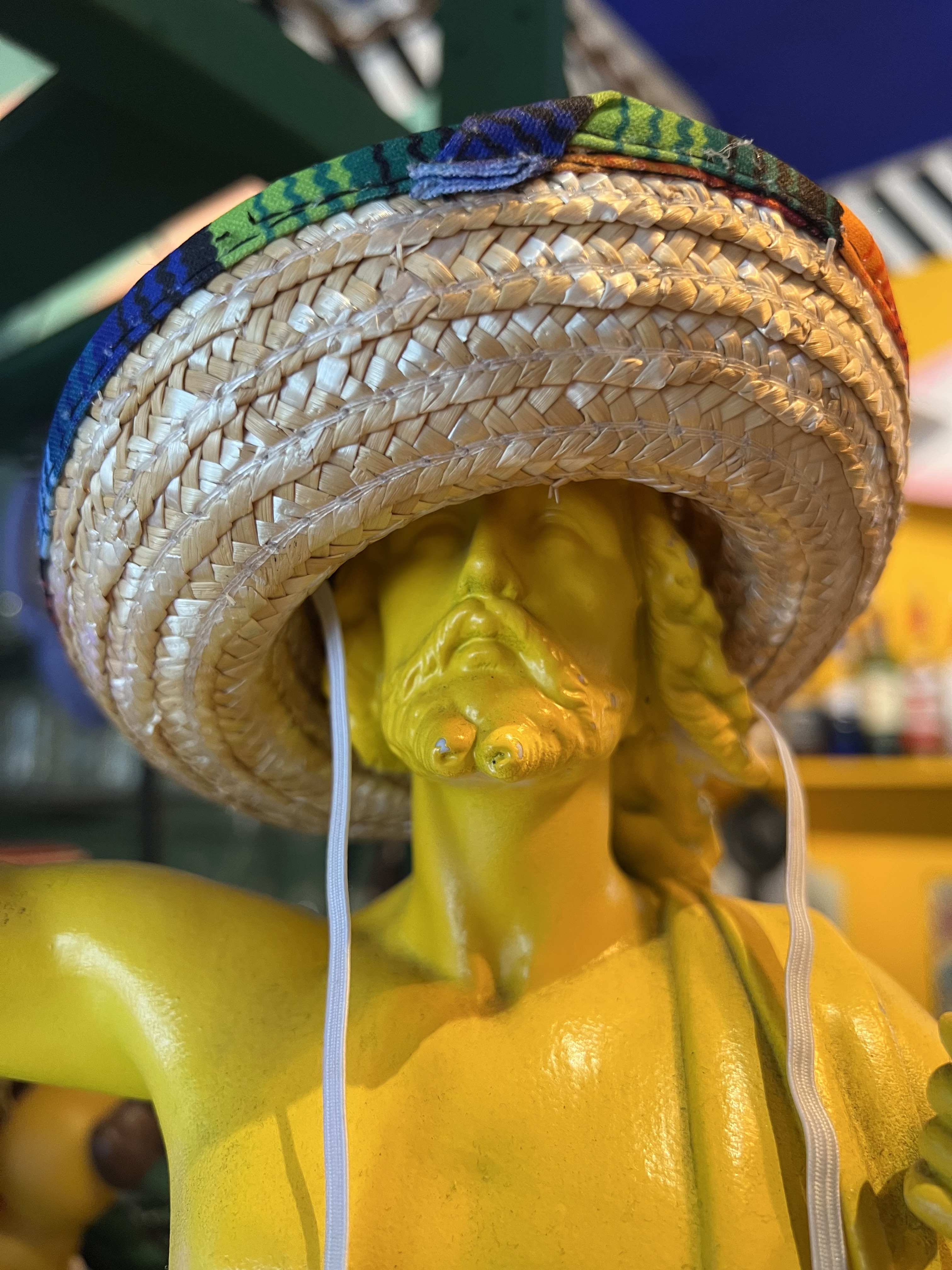
We had a beer at Honolulu. And then the bit Jonas couldn't stop looking at: a bright yellow bust that reads unmistakably as Jesus, crowned with a little straw sombrero. In a country this Catholic, that takes real nerve to leave just sitting out. I loved it.
Fyrtel, where the day found its second story
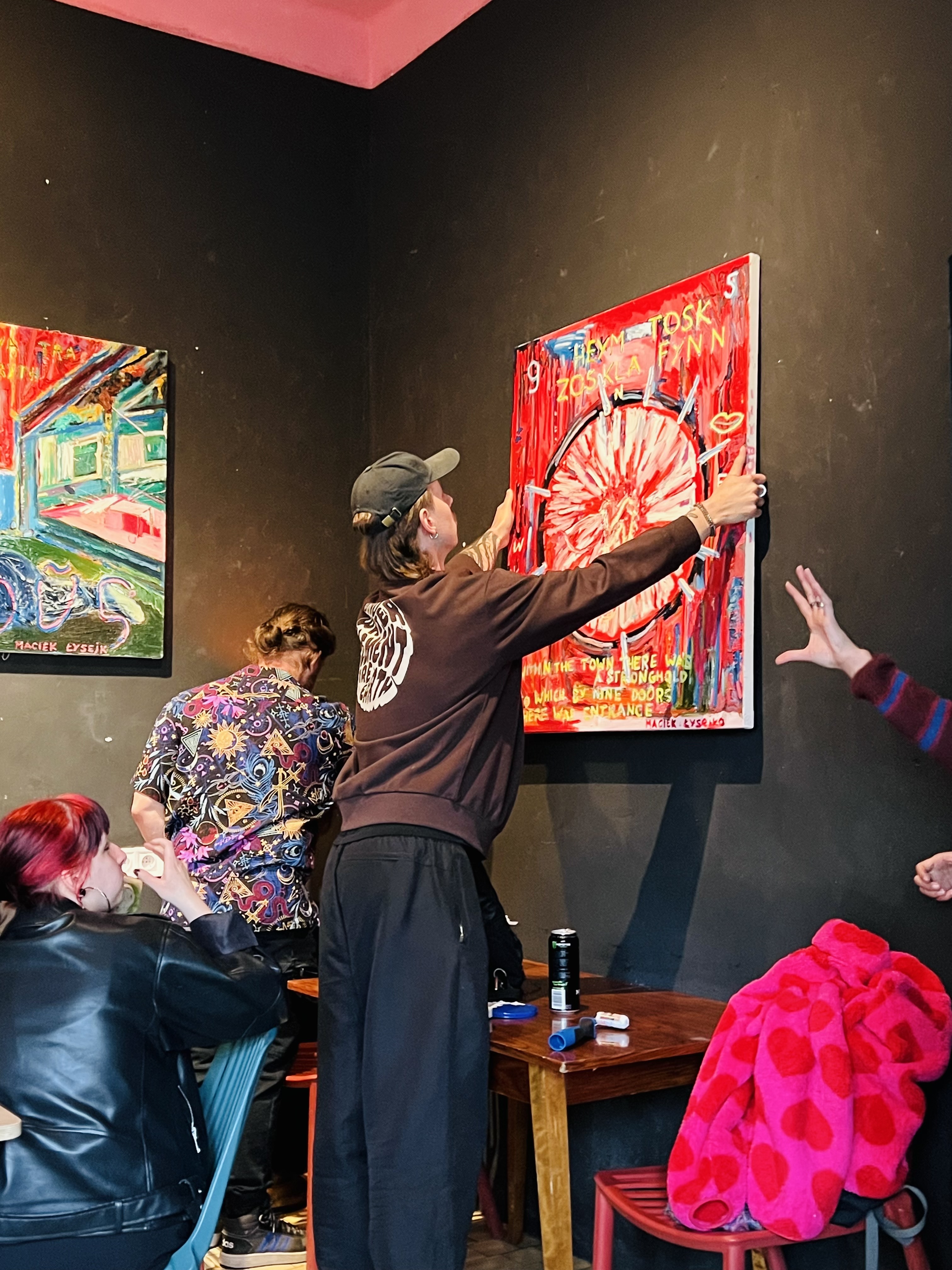
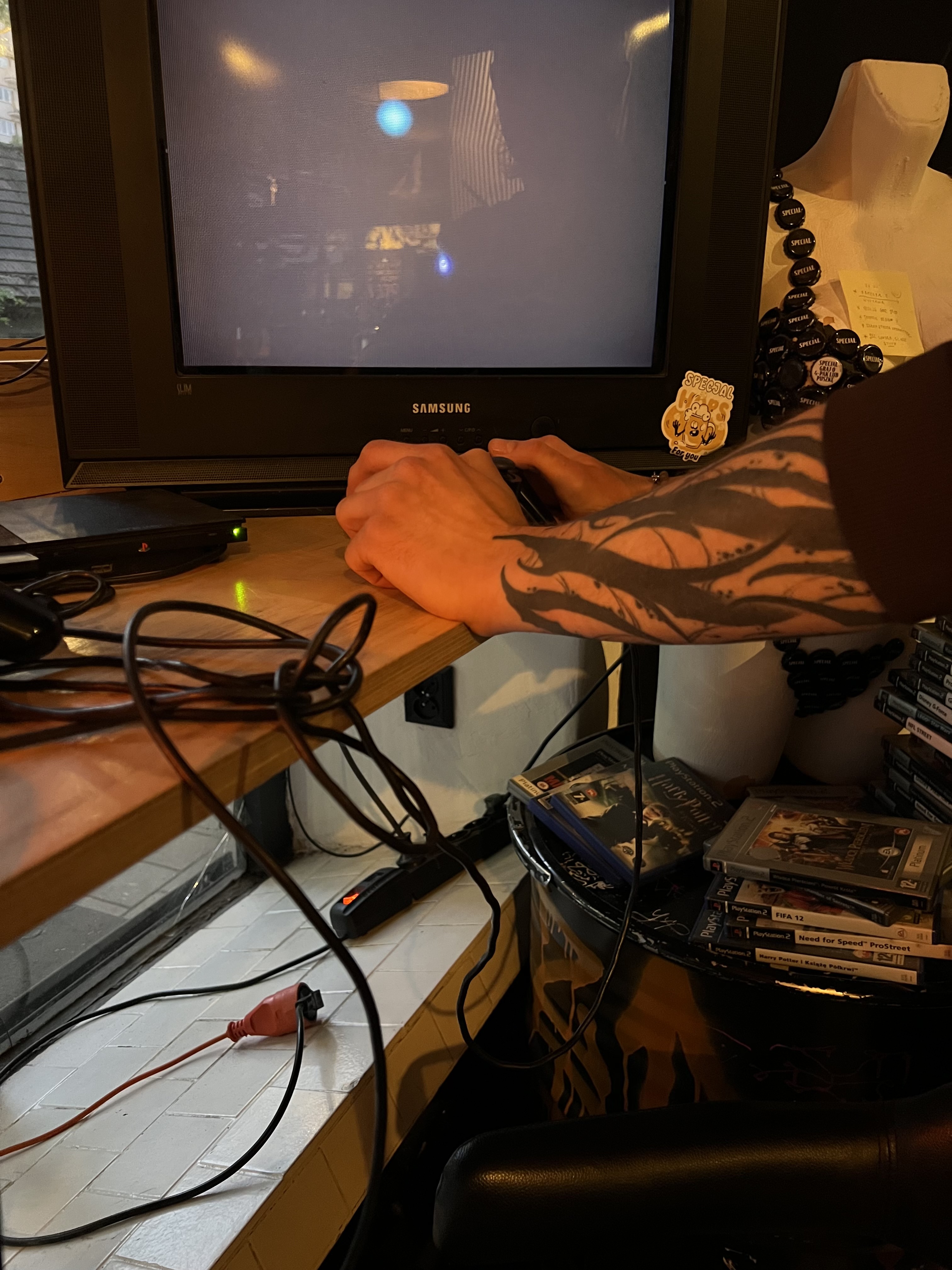
The last stop was Fyrtel — cables across white tile, its own gravity inside. Black matte walls, mid-century chairs, expressionist paintings everywhere.
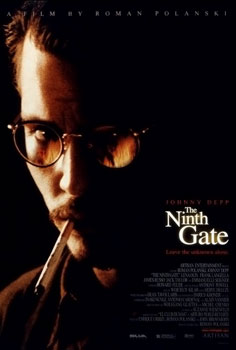
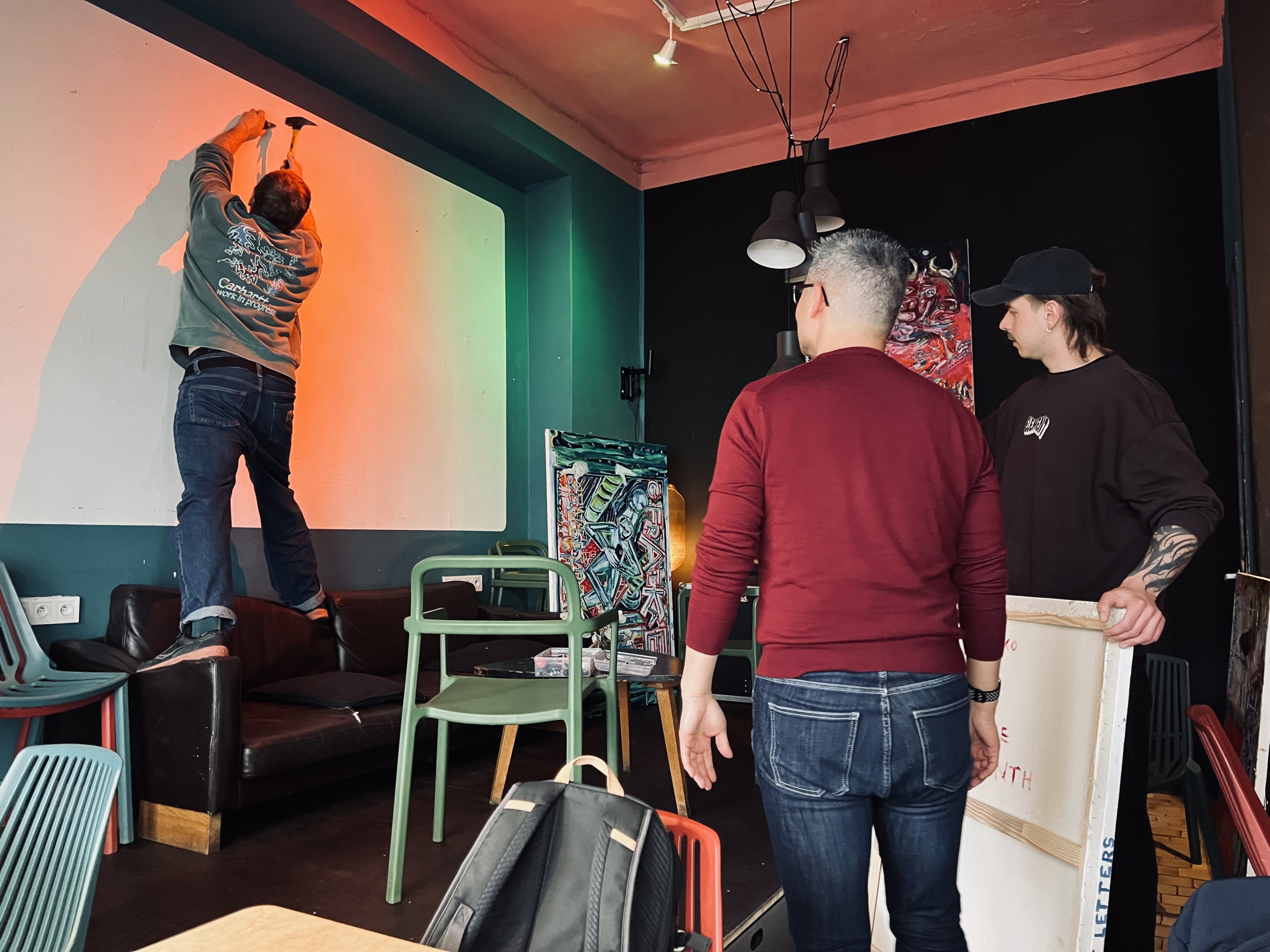
We'd walked in on a hanging — a few guys setting up a show for a local painter, one up on the sofa driving a nail into bare plaster, the others holding blank canvases. Jonas got pulled in. He offered his read on placement, and they actually listened: one canvas ended up turned ninety degrees, hung in a way they hadn't planned. One piece was from the Ninth Gate, and we went back and forth on what it meant for a while. Didn't settle it. Didn't really need to.
We ended, as we always do, on food. The kimchi here comes in two strengths now — the real one too spicy, so a local place is softening it. And "Korean carrot," those spiced strips, was invented by Koreans deported into the USSR who wanted kimchi and had only carrots.
What stays
>20,000 steps made, 2 cities visited, spoken with locals a lot. The trip made itself through a good company and a motivation to spend the day in a way so it's remembered years after. Thanks, Jonas, you're a thoughful and wise man. Good luck!